Quotessence
Home / Authors / Joel Salatin
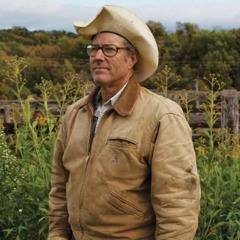
Joel Salatin

Joel Salatin Quotes

American farmer

Filter quotes by topic

Famous Joel Salatin Quotes

“A farmer friend of mine told me recently about a busload of middle school children who came to his farm for a tour. The first two boys off the bus asked, "Where is the salsa tree?" They thought they could go pick salsa, like apples and peaches. Oh my. What do they put on SAT tests to measure this? Does anybody care? How little can a person know about food and still make educated decisions about it? Is this knowledge going to change before they enter the voting booth? Now that's a scary thought.”

“The first supermarket supposedly appeared on the American landscape in 1946. That is not very long ago. Until then, where was all the food? Dear folks, the food was in homes, gardens, local fields, and forests. It was near kitchens, near tables, near bedsides. It was in the pantry, the cellar, the backyard.”

“Food security is not in the supermarket. It's not in the government. It's not at the emergency services division. True food security is the historical normalcy of packing it in during the abundant times, building that in-house larder, and resting easy knowing that our little ones are not dependent on next week's farmers' market or the electronic cashiers at the supermarket.”

“I saw a news report recently that measured average video game use by American men between the ages of twenty-five and thirty-five: twenty hours per week. Do you mean the flower of America's masculinity can't think of anything more important to do with twenty hours a week than sit in front of a video screen? Folks, this ain't normal. Can't we unplug already?”

“That many if not most people...who want fresh leafy greens in January buy them at the supermarket after they've been bleached and plastic-bag shipped from California or beyond is not a tribute to modern technology; it's an unprecedented abdication of personal responsibility and a ubiquitous benchmark of abnormality.”

“In my opinion, if there is one extremely legitimate use for petroleum besides running wood chippers and front-end loaders to handle compost, it's making plastic for season extension. It parks many of the trucks [for cross-country produce transportation]. With the trucks parked, greenhouses, tall tunnels, and more seasonal, localized eating, can we feed ourselves? We still have to answer that burning question.”

“A farm regulated to production of raw commodities is not a farm at all. It is a temporary blip until the land is used up, the water polluted, the neighbors nauseated, and the air unbreathable. The farmhouse, the concrete, the machinery, and outbuildings become relics of a bygone vibrancy when another family farm moves to the city financial centers for relief.”

“What happens is all these things we're seeing – campylobacter, E coli, mad cow, listeria, salmonella, that weren't even in the lexicon 30 years ago – that is the industrial paradigm exceeding its efficiency. So these Latin squiggly words that we're learning to say – bovine spongiform encephalopathy – are nature's language screaming to us: ENOUGH! And the question then is: what will it take for us to listen? And my contention is that Wall Street is still wearing conquistador mentality and uniforms, and nobody is listening to the pleadings of nature saying: 'Enough.'”

“You know what the best kind of organic certification would be? Make an unannounced visit to a farm and take a good long look at the farmer’s bookshelf. Because what you’re feeding your emotions and thoughts is what this is really all about. The way I produce a chicken is an extension of my worldview. You can learn more about that by seeing what’s sitting on my bookshelf than having me fill out a whole bunch of forms.”

“A culture that just views a pig as a pile of protoplasmic inanimate structure, and can be manipulated by whatever creative design humans can foist upon that critter, will probably view individuals within its community and other cultures in the community of nations, with the same type of disdain and disrespect and controlling-type mentality.”

“Our community of rebels, of humble truth seekers, wants to turn our culture around. We don't despise our country. We don't desire failure. We desire light, a beacon to show the world that our wealth need not show the way to more rapid destruction, but can be leveraged to heal more acres, more backyards, more communities faster than any civilization on the right path has ever done it.”