Quotessence
Home / Authors / Michelle Alexander
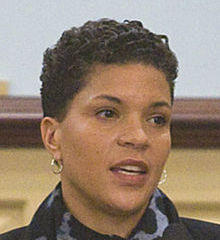
Michelle Alexander

Michelle Alexander Quotes

Professor

Filter quotes by topic

Famous Michelle Alexander Quotes

“Jim Crow and mass incarceration have similar political origins...both caste systems were born in part, due to desire among white elites to exploit the resentments, vulnerabilities and racial biases of poor and working-class whites for political or economic gain. Segregation laws were proposed as part of a deliberate and strategic effort to deflect anger and hostility that have been brewing against the white elite away from them and toward African Americans. The birth of mass incarceration can be traced to a similar political dynamic. Conservatives in the 1960s and 1970s sought to appeal to the racial biases and economic vulnerabilities of poor and working-class whites through racially coded rhetoric on crime and welfare. In both cases, the racial opportunists offered few, if any, economic reforms to address the legitimate economic anxieties of poor and working-class whites, proposing instead a crackdown on the racially defined "others." In the early years of Jim Crow, conservative white elites competed with each other by passing ever more stringent and oppressive Jim Crow legislation. A century later, politicians in the early years of the drug war competed with each other to prove who could be tougher on crime by passing ever harsher drug laws- a thinly veiled effort to appeal to poor and working-class whites who, once again, proved they were willing to forego economic and structural reform in exchange for an apparent effort to put blacks back "in their place.”

“The War on Drugs, cloaked in race-neutral language, offered whites opposed to racial reform a unique opportunity to express their hostility toward blacks and black progress, without being exposed to the charge of racism.”

“Mandatory minimum sentences give no discretion to judges about the amount of time that the person should receive once a guilty verdict is rendered. Harsh mandatory minimum sentences for drug offenses were passed by Congress in the 1980s as part of the war on drugs and the "get tough" movement, sentences that have helped to fuel our nation's prison boom and have also greatly aggravated racial disparities, particularly in the application of mandatory minimum sentences for crack cocaine.”

“The wave of punitiveness that washed over the United States with the rise of the drug war and the get tough movement really flooded our schools. Schools, caught up in this maelstrom, began viewing children as criminals or suspects, rather than as young people with an enormous amount of potential struggling in their own ways and their own difficult context to make it and hopefully thrive. We began viewing the youth in schools as potential violators rather than as children needing our guidance.”

“The war on drugs has been the engine of mass incarceration. Drug convictions alone constituted about two-thirds of the increase in the federal prison population and more than half of the increase in the state prison population between 1985 and 2000, the period of our prison system's most dramatic expansion.”

“Most Americans violate drug laws in their lifetime, but the enemy in this war has been racially defined. Not by accident, the drug war has been waged almost exclusively in poor communities of color, even though studies have consistently shown - for decades - the people of color are no more likely to use or sell illegal drugs than whites.”

“In the 1990s - the period of the greatest escalation of the drug war - nearly 80 percent of the increase in drug arrests was for marijuana possession, a drug less harmful than alcohol or tobacco and at least, if not more, prevalent in middle class white neighborhoods and college campuses as it is in the 'hood.”

“Many people don't realize that financial incentives have been built into the drug war that guarantee that law enforcement will continue to arrest extraordinary numbers of people, particularly in poor communities of color, for minor drug offenses that get ignored on the other side of town.”

“For those who say that the war on drugs and the system of mass incarceration really isn't about race, I say there is no way we would allow the majority of young white men to be swept into the criminal justice system for minor drug offenses, branded criminals and felons, and then stripped of their basis civil and human rights while young black men who are engaged in the same activity trot off to college. That would never be accepted as the norm.”

“We have now spent 1 trillion dollars waging the drug war since it began. A trillion. Those funds could have been used for education, jobs and drug treatment in the communities that needed it most. We could have used those funds for our collective well being, instead those dollars paved the way for the destruction of countless lives, families, and dreams.”