Quotessence
Home / Authors / Richard Louv
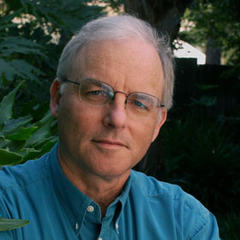
Richard Louv

Richard Louv Quotes

Author

Filter quotes by topic

Famous Richard Louv Quotes

“She was one of those exceptional children who do still spend time outside, in solitude. In her case nature represented beauty - and refuge. "It's so peaceful out there and the air smells so good. I mean, it's polluted, but not as much as the city air. For me, it's completely different there," she said. "It's like you're free when you go out there. It's your own time. Sometimes I go there when I'm mad - and then, just with the peacefulness, I'm better. I can come back home happy, and my mom doesn't even know why." The she described her special part of the woods. "I had a place. There was a big waterfall and a creek on one side of it. I'd dug a big hole there, and sometimes I'd take a tent back there, or a blanket, and just lie down in the hole, and look up at the trees and sky. Sometimes I'd fall asleep back there. I just felt free; it was like my place, and I could do what I wanted, with nobody to stop me. I used to go down there almost every day." The young poet's face flushed. Her voice thickened. "And then they just cut the woods down. It was like they cut down part of me.”

“A generation of children is not only being raised indoors, but is being confined to even smaller spaces. Jane Clark, a University of Maryland professor of kinesiology . . . calls them "containerized kids"--they spend more and more time in car seats, high chairs, and even baby seats for watching TV. When small children go outside, they're often placed in containers--strollers--and pushed by walking or jogging parents. . . Most kid-containerizing is done for safety concerns, but the long term health of these children is compromised. (35)”

“As a species, we are most animated when our days and nights on Earth are touched by the natural world. We can find immeasurable joy in the birth of a child, a great work of art, or falling in love.”

“In a famous Middletown study of Muncie, Indiana, in 1924, mothers were asked to rank the qualities they most desire in their children. At the top of the list were conformity and strict obedience. More than fifty years later, when the Middletown survey was replicated, mothers placed autonomy and independence first. The healthiest parenting probably promotes a balance of these qualities in children.”

“Today's children are living a childhood of firsts. They are the first daycare generation; the first truly multicultural generation; the first generation to grow up in the electronic bubble, the environment defined by computers and new forms of television; the first post-sexual revolution generation; the first generation for which nature is more abstraction than reality; the first generation to grow up in new kinds of dispersed, deconcentrated cities, not quite urban, rural, or suburban.”

“Progress does not have to be patented to be worthwhile. Progress can also be measured by our interactions with nature and its preservation. Can we teach children to look at a flower and see all the things it represents: beauty, the health of an ecosystem, and the potential for healing?”

“If getting our kids out into nature is a search for perfection, or is one more chore, then the belief in perfection and the chore defeats the joy. It's a good thing to learn more about nature in order to share this knowledge with children; it's even better if the adult and child learn about nature together. And it's a lot more fun.”

“We have such a brief opportunity to pass on to our children our love for this Earth, and to tell our stories. These are the moments when the world is made whole. In my children's memories, the adventures we've had together in nature will always exist.”

“The physical exercise and emotional stretching that children enjoy in unorganized play is more varied and less time-bound than is found in organized sports. Playtime—especially unstructured, imaginative, exploratory play—is increasingly recognized as an essential component of wholesome child development.”

“An indoor (or backseat) childhood does reduce some dangers to children; but other risks are heightened, including risks to physical and psychological health, risk to children's concept and perception of community, risk to self-confidence and the ability to discern true danger”

“The Centers for Disease Control (CDC) reports that the number of overweight adult Americans increased over 60 percent between 1991 and 2000. According to CDC data, the U.S. population of overweight children between ages two and five increased by almost 36 percent from 1989 to 1999.”

“A widening circle of researchers believes that the loss of natural habitat, or the disconnection from nature even when it is available, has enormous implications for human health and child development. They say the quality of exposure to nature affects our health at an almost cellular level.”

“As the nature deficit grows, another emerging body of scientific evidence indicates that direct exposure to nature is essential for physical and emotional health. For example, new studies suggest that exposure to nature may reduce the symptoms of Attention Deficit Hyperactivity Disorder (ADHD), and that it can improve all children's cognitive abilities and resistance to negative stresses and depression.”

“From 1997 to 2003, there was a decline of 50 percent in the proportion of children nine to twelve who spent time in such outside activities as hiking, walking, fishing, beach play, and gardening, according to a study by Sandra Hofferth at the University of Maryland.”

“Nature is often overlooked as a healing balm for the emotional hardships in a child's life. You'll likely never see a slick commercial for nature therapy, as you do for the latest antidepressant pharmaceuticals. But parents, educators, and health workers need to know what a useful antidote to emotional and physical stress nature can be. Especially now.”

“Stress reduction, greater physical health, a deeper sense of spirit, more creativity, a sense of play, even a safer life-these are the rewards that await a family then it invites more nature into children's lives.”