Quotessence
Home / Authors / John Ruskin
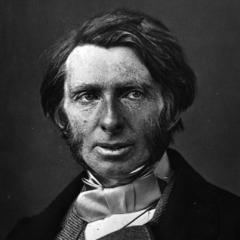
John Ruskin

John Ruskin Quotes

Art critic

Filter quotes by topic

Famous John Ruskin Quotes

“A gentleman's first characteristic is that fineness of structure in the body which renders it capable of the most delicate sensation; and of structure in the mind which renders it capable of the most delicate sympathies; one may say simply "fineness of nature.”

“I believe that there is no test of greatness in periods, nations or men more sure than the development, among them or in them, of a noble grotesque, and no test of comparative smallness or limitation, of one kind or another, more sure than the absence of grotesque invention, or incapability of understanding it.”

“Wherever the human mind is healthy and vigorous in all its proportions, great in imagination and emotion no less than in intellect, and not overborne by an undue or hardened pre-eminence of the mere reasoning faculties, there the grotesque will exist in full energy.”

“The fact of our deriving constant pleasure from whatever is a type or semblance of divine attributes, and from nothing but that which is so, is the most glorious of all that can be demonstrated of human nature; it not only sets a great gulf of specific separation between us and the lower animals, but it seems a promise of a communion ultimately deep, close, and conscious, with the Being whose darkened manifestations we here feebly and unthinkingly delight in.”

“It is, indeed, right that we should look for, and hasten, so far as in us lies, the coming of the day of God; but not that we should check any human effort by anticipations of its approach. We shall hasten it best by endeavoring to work out the tasks that are appointed for us here; and, therefore, reasoning as if the world were to continue under its existing dispensation, and the powers which have just been granted to us were to be continued through myriads of future ages.”

“The enormous influence of novelty--the way in which it quickens observations, sharpens sensations, and exalts sentiment--is not half enough taken note of by us, and is to me a very sorrowful matter. And yet, if we try to obtain perpetual change, change itself will become monotonous.”

“Obedience is, indeed, founded on a kind of freedom, else it would become mere subjugation, but that freedom is only granted that obedience may be more perfect; and thus while a measure of license is necessary to exhibit the individual energies of things, the fairness and pleasantness and perfection of them all consist in their restraint.”

“All the best things and treasures of this world are not to be produced by each generation for itself; but we are all intended, not to carve our work in snow that will melt, but each and all of us to be continually rolling a great white gathering snow-ball, higher and higher, larger and larger, along the Alps of human power.”

“The art of nations is to be accumulative, just as science and history are; the work of living men not superseding, but building itself upon the work of the past.”

“The repose necessary to all beauty is repose, not of inanition, nor of luxury, nor of irresolution, but the repose of magnificent energy and being; in action, the calmness of trust and determination; in rest, the consciousness of duty accomplished and of victory won; and this repose and this felicity can take place as well in the midst of trial and tempest, as beside the waters of comfort.”

“In all things that live there are certain irregularities, and deficiencies which are not only signs of life, but sources of beauty. No human face is exactly the same in its lines on each side, no leaf perfect in its lobes, no branch in its symmetry.”

“There is a certain period of the soul-culture when it begins to interfere with some of characters of typical beauty belonging to the bodily frame, the stirring of the intellect wearing down the flesh, and the moral enthusiasm burning its way out to heaven, through the emaciation of the earthen vessel; and there is, in this indication of subduing the mortal by the immortal part, an ideal glory of perhaps a purer and higher range than that of the more perfect material form. We conceive, I think, more nobly of the weak presence of Paul than of, the fair and ruddy countenance of David.”

“Christian faith is a grand cathedral, with divinely pictured windows. Standing without you see no glory, nor can possibly imagine any. Nothing is visible but the merest outline of dusky shapes. Standing within all is clear and defined; every ray of light reveals an army of unspeakable splendors.”

“Men have commonly more pleasure in the criticism which hurts than in that which is innocuous, and are more tolerant of the severity which breaks hearts and ruins fortunes than of that which falls impotently on the grave.”

“Courage, so far as it is a sign of race, is peculiarly the mark of a gentleman or a lady; but it becomes vulgar if rude or insensitive, while timidity is not vulgar, if it be a characteristic of race or fineness of make. A fawn is not vulgar in being timid, nor a crocodile "gentle" because courageous.”

“Our respect for the dead, when they are just dead, is something wonderful, and the way we show it more wonderful still. We show it with black feathers and black horses; we show it with black dresses and black heraldries; we show it with costly obelisks and sculptures of sorrow, which spoil half of our beautiful cathedrals. We show it with frightful gratings and vaults, and lids of dismal stone, in the midst of the quiet grass; and last, and not least, we show it by permitting ourselves to tell any number of falsehoods we think amiable or credible in the epitaph.”

“As long as there are cold and nakedness in the land around you, so long can there be no question at all but that splendor of dress is a crime. In due time, when we have nothing better to set people to work at, it may be right to let them make lace and cut jewels; but as long as there are any who have no blankets for their beds, and no rags for their bodies, so long it is blanket-making and tailoring we must set people to work at, not lace.”

“We are foolish, and without excuse foolish, in speaking of the superiority of one sex to the other, as if they could be compared in similar things! Each has what the other has not; each completes the other; they are in nothing alike and the happiness and perfection of both depend on each asking and receiving from the other what the other only can give.”

“God shows us in Himself, strange as it may seem, not only authoritative perfection, but even the perfection of obedience--an obedience to His own laws; and in the cumbrous movement of those unwieldiest of his creatures we are reminded, even in His divine essence, of that attribute of uprightness in the human creature "that sweareth to his own hurt and changeth not.”

“But if, indeed, there be a nobler life in us than in these strangely moving atoms; if, indeed, there is an eternal difference between the fire which inhabits them, and that which animates us,--it must be shown, by each of us in his appointed place, not merely in the patience, but in the activity of our hope, not merely by our desire, but our labor, for the time when the dust of the generations of men shall be confirmed for foundations of the gates of the city of God.”

“Now the basest thought possible concerning man is, that he has no spiritual nature; and the foolishest misunderstanding of him possible is, that he has, or should have, no animal nature. For his nature is nobly animal, nobly spiritual,--coherently and irrevocably so; neither part of it may, but at its peril, expel, despise, or defy the other.”