Quotessence
Home / Authors / John Ruskin Books
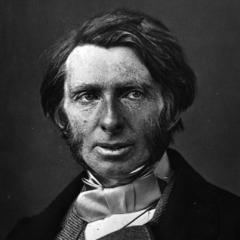
John Ruskin

John Ruskin Books

Art critic

Unto this Last

A source page for quotes linked to John Ruskin.
0 quotes

The Two Paths

A source page for quotes linked to John Ruskin.

0 quotes

Works

A source page for quotes linked to John Ruskin.

0 quotes

A Joy Forever

A source page for quotes linked to John Ruskin.

0 quotes

Fors Clavigera

A source page for quotes linked to John Ruskin.

0 quotes

Related Quotes

“The persons who become rich are, generally speaking, industrious, resolute, proud, covetous, prompt, methodical, sensible, unimaginative, insensitive, and ignorant. The persons who remain poor are the entirely foolish, the entirely wise, the idle, the reckless, the humble, the thoughtful, the dull, the imaginative, the sensitive, the well-informed, the improvident, the irregularly and impulsively wicked, the clumsy knave, the open thief, and the entirely merciful just and godly person.”

“It can be met only by a right understanding, on the part of all classes, of what kinds of labor are good for men, raising them, and making them happy; by a determined sacrifice of such convenience, or beauty, or cheapness as is to be got only by the degradation of the workman; and by equally determined demand for the products and results of healthy and ennobling labor.”

“Nor is it only as a sign of greater gentleness or refinement of mind, but as a proof of the best possible direction of this refinement, that the tendency of the Gothic to the expression of vegetative life is to be admired. That sentence of Genesis, 'I have given thee every green herb for meat,' like all the rest of the book, has a profound symbolical as well as literal meaning. It is not merely the nourishment of the body, but the food of the soul, that is intended. The green herb is, of all nature, that which is most essential to the healthy spiritual life of man. Most of us do not need fine scenery; the precipice and the mountain peak are not intended to be seen by all men, — perhaps their power is greatest. over those who are unaccustomed to them. But trees and fields and flowers were made for all, and are necessary for all. God has connected the labour which is essential to the bodily sustenance with the pleasures which are healthiest for the heart; and while He made the ground stubborn, He made its herbage fragrant, and its blossoms fair. The proudest architecture that man can build has no higher honour than to bear the image and recall the memory of that grass of the field which is, at once, the type and the support of his existence; the goodly building is then most glorious when it is sculptured into the likeness of the leaves of Paradise; and the great Gothic spirit, as we showed it to be noble in its disquietude, is also noble in its hold of nature; it is, indeed, like the dove of Noah, in that she found no rest upon the face of the waters, — but like her in this also, 'Lo, in her mouth was an olive branch, plucked off.”

“I believe, then, that the characteristic or moral elements of Gothic are the following, placed in the order of their importance: 1. Savageness. 2. Changefulness. 3. Naturalism. 4. Grotesqueness. 5. Rigidity. 6. Redundance. These characters are here expressed as belonging to the building; as belonging to the builder, they would be expressed thus: - 1. Savageness or Rudeness. 2. Love of Change. 3. Love of Nature. 4. Disturbed Imagination. 5. Obstinacy. 6. Generosity. And I repeat, that the withdrawal of any one, or any two, will not at once destroy the Gothic character of a building, but the removal of a majority of them will. I shall proceed to examine them in their order.”

“Great art, whether expressing itself in words, colours, or stones, does not say the same thing over and over again; that the merit of architectural, as of every other art, consists in its saying new and different things; that to repeat itself is no more a characteristic of genius in marble than it is of genius in print; and that we may, without offending any laws of good taste, require of an architect, as we do of a novelist, that he should be not only correct, but entertaining.”

“It is not that the noble nature loves monotony, any more than it loves darkness or pain. But it can bear with it, and receive a high pleasure in the endurance or patience, a pleasure necessary to the well-being of this world; while those who will not submit to the temporary sameness, but rush from one change to another, gradually dull the edge of change itself, and bring a shadow and weariness over the whole world from which there is no more escape.”

“But this is certain, that on the broken rocks of the foreground in the crystalline groups the mosses seem to set themselves consentfully and deliberately to the task of producing the most exquisite harmonies of color in their power. They will not conceal the form of the rock, but will gather over it in little brown bosses, like small cushions of velvet made of mixed threads of dark ruby silk and gold, rounded over more subdued films of white and grey, with lightly crisped and curled edges like hoar frost on fallen leaves, and minute clusters of upright orange stalks with pointed caps, and fibres of deep green, and gold, and faint purple passing into black, all woven together, and following with unimaginable fineness of gentle growth the undulation of the stone they cherish, until it is charged with color so that it can receive no more; and instead of looking rugged, or cold, or stern, as anything that a rock is held to be at heart, it seems to be clothed with a soft, dark leopard skin, embroidered with arabesque of purple and silver.”

“Let us suppose that this ounce of mud is left in perfect rest, and that its elements gather together, like to like, so that their atoms may get into the closest relations possible. Let the clay begin. Ridding itself of all foreign substance, it gradually becomes a white earth, already very beautiful; and fit, with help of congealing fire, to be made into finest porcelain, and painted on, and be kept in kings’ palaces. But such artificial consistence is not its best. Leave it still quiet to follow its own instinct of unity, and it becomes not only white, but clear; not only clear, but hard; not only clear and hard, but so set that it can deal with light in a wonderful way, and gather out of it the loveliest blue rays only, refusing the rest. We call it then a sapphire. Such being the consummation of the clay, we give similar permission of quiet to the sand. It also becomes, first, a white earth, then proceeds to grow clear and hard, and at last arranges itself in mysterious, infinitely fine, parallel lines, which have the power of reflecting not merely the blue rays, but the blue, green, purple, and red rays in the greatest beauty in which they can be seen through any hard material whatsoever. We call it then an opal. In next order the soot sets to work; it cannot make itself white at first, but instead of being discouraged, tries harder and harder, and comes out clear at last, and the hardest thing in the world; and for the blackness that it had, obtains in exchange the power of reflecting all the rays of the sun at once in the vividest blaze that any solid thing can shoot. We call it then a diamond. Last of all the water purifies or unites itself, contented enough if it only reach the form of a dew-drop; but if we insist on its proceeding to a more perfect consistence, it crystallizes into the shape of a star. And for the ounce of slime which we had by political economy of competition, we have by political economy of co-operation, a sapphire, an opal, and a diamond, set in the midst of a star of snow.”

“Há dois deveres em relação à nossa arquitetura nacional cuja importância é impossível superestimar: o primeiro, tornar a arquitetura atual, histórica; e o segundo, preservar, como a mais preciosa de todas as heranças, aquela das épocas passadas. É em relação à primeira dessas duas orientações que a Memória pode ser verdadeiramente considerada como a Sexta Lâmpada da Arquitetura.”

“So far, therefore, as the science of exchange relates to the advantage of one of the exchanging persons only, it is founded on the ignorance or incapacity of the opposite person. . . . It is therefore a science founded on nescience. . . . This science, alone of sciences, must, by all available means, promulgate and prolong its opposite nescience. . . . It is therefore peculiarly and alone science of darkness.”

“In our whole life melody the music is broken off here and there by rests, and we foolishly think we have come to the end of time. God sends a time of forced leisure, a time of sickness and disappointed plans, and makes a sudden pause in the hymns of our lives, and we lament that our voice must be silent and our part missing in the music which ever goes up to the ear of our Creator. Not without design does God write the music of our lives. Be it ours to learn the time and not be dismayed at the rests. If we look up, God will beat the time for us.”

“Every human action gains in honor, in grace, in all true magnificence, by its regard to things that are to come. It is the far sight, the quiet and confident patience, that, above all other attributes, separate man from man, and near him to his Maker; and there is no action nor art, whose majesty we may not measure by this test.”

“You cannot hammer a girl into anything. She grows as a flower does, she will wither without sun; she will decay in her sheath as a narcissus will if you do not give her air enough; she might fall and defile her head in dust if you leave her without help at some moments in her life; but you cannot fetter her; she must take her own fair form and way if she take any.”

“Painting with all its technicalities, difficulties, and peculiar ends, is nothing but a noble and expressive language, invaluable as the vehicle of thought, but by itself nothing.”

“If it is the love of that which your work represents--if, being a landscape painter, it is love of hills and trees that moves you--if, being a figure painter, it is love of human beauty, and human soul that moves you--if, being a flower or animal painter, it is love, and wonder, and delight in petal and in limb that move you, then the Spirit is upon you, and the earth is yours, and the fullness thereof.”

“The sculptor must paint with his chisel; half his touches are not to realize, but to put power into, the form. They are touches of light and shadow, and raise a ridge, or sink a hollow, not to represent an actual ridge or hollow, but to get a line of light, or a spot of darkness.”

“The true work of a critic is not to make his hearer believe him, but agree with him.”