Quotessence
Home / Authors / Oscar Wilde Books
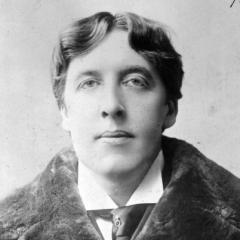
Oscar Wilde

Oscar Wilde Books

Writer

Related Quotes

“Every impulse that we strive to strangle broods in the mind, and poisons us. The body sins once, and has done with its sin, for action is a mode of purification. Nothing remains then but the recollection of a pleasure, or the luxury of a regret. The only way to get rid of a temptation is to yield to it. Resist it, and your soul grows sick with longing for the things it has forbidden to itself, with desire for what it’s monstrous laws have made monstrous and unlawful. It has been said that the great events of the world take place in the brain. It is in the brain, and the brain only, that the great sins of the world take place.”

“When I say that I am convinced of these things I speak with too much pride. Far off, like a perfect pearl, one can see the city of God. It is so wonderful that it seems as if a child could reach it in a summer's day. And so a child could. But with me and such as me it is different. One can realise a thing in a single moment, but one loses it in the long hours that follow with leaden feet. It is so difficult to keep 'heights that the soul is competent to gain.' We think in eternity, but we move slowly through time; and how slowly time goes with us who lie in prison I need not tell again, nor of the weariness and despair that creep back into one's cell, and into the cell of one's heart, with such strange insistence that one has, as it were, to garnish and sweep one's house for their coming, as for an unwelcome guest, or a bitter master, or a slave whose slave it is one's chance or choice to be.”

“The common hill-flowers wither, but they blossom again. The laburnum will be as yellow next June as it is now. In a month there will be purple stars on the clematis, and year after year the green night of its leaves will hold its purple stars. But we never get back our youth. The pulse of joy that beats in us at twenty becomes sluggish. Our limbs fall, our senses rot. We degenerate into hideous puppets, haunted by the memory of the passions of which we were too much afraid, and the exquisite temptations that we had not the courage to yield to.”

“The one charm about the past is that it is the past. But women never know when the curtain has fallen. They always want a sixth act, and as soon as the interest of the play is entirely over, they propose to continue it. If they were allowed their own way, every comedy would have a tragic ending, and every tragedy would culminate in a farce. They are charmingly artificial, but they have no sense of art.”

“You remember that lovely passage in which Plato describes how a young Greek should be educated, and with what insistence he dwells upon the importance of surroundings, telling us how the lad is to be brought up in the midst of fair sights and sounds, so that the beauty of material things may prepare his soul for the reception of the beauty that is spiritual. Insensibly, and without knowing the reason why, he is to develop that real love of beauty which, as Plato is never weary of reminding us, is the true aim of education. By slow degrees there is to be engendered in him such a temperament as will lead him naturally and simply to choose the good in preference to the bad, and, rejecting what is vulgar and discordant, to follow by fine instinctive taste all that possesses grace and charm and loveliness. Ultimately, of course, this taste is to become critical and self-conscious, but at first it is to exist purely as a cultivated instinct, and ‘he who has received this true culture of the inner man will with clear and certain vision per­ceive the omissions and faults in art or nature, and with a taste that cannot err, while he praises, and finds his pleasure in what is good, and receives it into his soul, and so becomes good and noble, will rightly blame and hate the bad, now in the days of his youth, even before he is able to know the reason why:’ and so, when, later on, the critical and self-conscious spirit develops in him, he ‘will recognise and salute it as a friend with whom his education has made him long familiar.”