Quotessence
Home / Authors / Philip Kotler Books
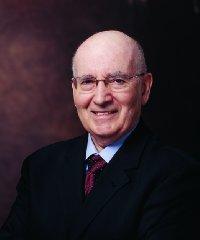
Philip Kotler

Philip Kotler Books

Author

Related Quotes

“Most of the productivity gains appear to go to the top 1 percent. Most people don't have enough income and as a result, they borrow additional money by using their credit card and they fall into high debt. The result of the growing income gap is a slower growing GDP (too few people with money to spend) and a rising tide of indebtedness.”

“In working on any one problem, such as higher minimum wages, so many other issues come into play, such as some businesses possibly closing down, thus creating fewer jobs and more unemployment and incentivizing companies to import more goods from abroad, which leads to even less employment at home, and so on.”

“Requiring the payment of higher wages will lead to a loss of some jobs and a raising of prices which drives companies to search for automation to reduce costs. On the other hand, those receiving higher wages will spend more (the marginal propensity to consume is close to 1 for low income earners) and this will increase demand for additional goods and services. Henry Ford had the clearest vision of why companies can actually benefit by paying higher wages.”

“The size of the U.S. middle class has been shrinking. Wages have been stagnant. We don't have those factory jobs that paid a living wage and enabled a family to have a home where the wife did not have to work. But we sent our factories abroad and there is no likelihood of getting them back. Equally worrisome is that some managerial jobs and professional jobs (such as lawyers) which support middle class life are threatened by automation.”

“I would favor three policies: raising the minimum wage to $12, closing the tax loophole where persons only pay a 15% income tax on long term capital gains (tax it at the full tax rate), and institute a progressive tax moving the highest tax rate from 39.6% to 45%. I would favor implementing these three policies in that order, starting with raising the minimum wage, but not stopping there.”

“Every company that manufactures something is causing some damage either to the soil or water or air. Most companies treat these as externalities. But the growing movement of sustainability calls for companies to internalize these costs. Once companies do this, they will have a strong incentive to reduce their carbon footprint.”

“There are times when a market such as housing, transportation or the stock or mortgage market keep rising and people with capital want to join in this growth. Soon the markets become overheated, partly because of the abundance of investment money and speculation. This is when the government should raise interest rates and increase the cost of borrowed money. Governments are shy about doing this because it could cause the very recession. Yet this is the best time to do this so that the inevitable recession never reaches the magnitude of the recent Great Recession.”

“Turbulence is a condition that we all experience during a flight when the plane is bouncing around by competing air currents. By analogy, the economy may bounce around a lot because of competing currents of public moods and investments. One week everyone might be optimistic and then suddenly something happens to turn everyone into pessimists. Investment dries up and investors become risk averse. A sudden piece of good news then turns around the public mood.”

“We need to put limits on how much an individual, group or business can spend on influencing an individual legislator or a whole set of legislators. Look at the vast sums that the NRA spends on getting all legislators to be soft on gun control. Legislators find it hard to refuse the NRA's largess when they need contributions to their political campaign wherever they can get them.”

“Our infrastructure of bridges, roads and ports has been given a D-level rating by many civil engineer societies. The government should shift some money from the Defense budget and hire companies to fix our infrastructure. As for non-construction workers, we need to do job retraining in those growing areas where more skilled workers will be needed.”

“A person without an Apple watch is perfectly content with his present watch but when he sees his friends buying the watch, he will hanker for an Apple watch. The endless cycle of wanting, getting, and wanting again is part of the plot of Capitalism. It is the way Capitalism creates jobs. The only antidote is Buddhism that holds that people might be happier by renouncing desire rather than by striving to satisfy desire. But then how can the economy create enough jobs in a Buddhist society of "less is more."”

“The CEO announces that the purpose of the firm is to improve the lives of the customers and the lives of the firm's stakeholders and the quality of the planet. The company will give fair compensation to all the stakeholders and the CEO will not earn more than 20 times the median income of his employees. He will want his employees to rate him, just as he also has to rate them.”

“My primary early interest was in marketing and my aim was to improve its theories, methods and tools. Early on I pressed companies to adopt a consumer orientation and to be in the value creation business. I didn't pay much attention to the social responsibilities of business until later. Now I am pressing companies to address the triple bottom line: people, the planet, and profits. I found that companies were too much into short term profit maximization and they needed to invest more in sustainability thinking.”

“I admire companies that have a purpose, passion, and performance. I am a fan of Unilever under its CEO Paul Polman, not only for the company's insights into women and men when they buy beauty products or skin products (the DOVE woman, the AXE man), but also as a company seeking to achieve both growth and practicing social responsibility.”

“The Republican Party has consistently opposed Obamacare (as costing more), stimulus spending (as increasing inflation), etc., none of which has happened in spite of seven years of their warnings. Their main problem is that they don't have the character to admit that they are wrong. They don't have enough character to rethink their deeply held assumptions.”