Quotessence
Home / Authors / Alexander Hamilton
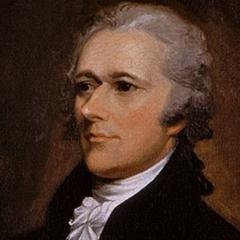
Alexander Hamilton

Alexander Hamilton Quotes

Founding Father of the United States

Filter quotes by topic

Famous Alexander Hamilton Quotes

“The history of ancient and modern republics had taught them that many of the evils which those republics suffered arose from the want of a certain balance, and that mutual control indispensable to a wise administration. They were convinced that popular assemblies are frequently misguided by ignorance, by sudden impulses, and the intrigues of ambitious men; and that some firm barrier against these operations was necessary. They, therefore, instituted your Senate.”

“Of those men who have overturned the liberties of republics, the greatest number have begun their career by paying an obsequious court to the people, commencing demagogues and ending tyrants.”

“There is no part of the administration of government that requires extensive information and a thorough knowledge of the principles of political economy, so much as the business of taxation. The man who understands those principles best will be least likely to resort to oppressive expedients, or sacrifice any particular class of citizens to the procurement of revenue. It might be demonstrated that the most productive system of finance will always be the least burdensome.”

“There is perhaps, nothing more likely to disturb the tranquillity of nations, than their being bound to mutual contributions for any common object that does not yield an equal and coincident benefit. For it is an observation as true, as it is trite, that there is nothing men differ so readily about as the payment of money.”

“Americans rouse - be unanimous, be virtuous, be firm, exert your courage, trust in Heaven, and nobly defy the enemies both of God and man!”

“The natural cure for an ill-administration, in a popular or representative constitution, is a change of men.”

“[E]very act of a delegated authority, contrary to the tenor of the commission under which it is exercised, is void. No legislative act, therefore, contrary to the Constitution, can be valid. To deny this, would be to affirm, that the deputy is greater than his principal; that the servant is above his master; that the representatives of the people are superior to the people themselves; that men acting by virtue of powers, may do not only what their powers do not authorize, but what they forbid.”

“Upon this law, depend the natural rights of mankind, the supreme being gave existence to man, together with the means of preserving and beatifying that existence. He endowed him with rational faculties, by the help of which, to discern and pursue such things, as were consistent with his duty and interest, and invested him with an inviolable right to personal liberty, and personal safety.”

“As you sometimes swear by him that made you, I conclude your sentiments do not correspond with his, in that which is the basis of the doctrine you both agree in: and this makes it impossible to imagine whence this congruity between you arises. "To grant that there is a supreme intelligence who rules the world and has established laws to regulate the actions of his creatures; and still to assert that man, in a state of nature, may be considered as perfectly free from all restraints of law and government, appears to a common understanding altogether irreconcilable.”

“Good and wise men, in all ages, have embraced a very dissimilar theory. They have supposed that the deity, from the relations we stand in to himself and to each other, has constituted an eternal and immutable law, which is indispensably obligatory upon all mankind, prior to any human institution whatever. This is what is called the law of nature....Upon this law depend the natural rights of mankind.”