Quotessence
Home / Authors / Christopher Isherwood Books
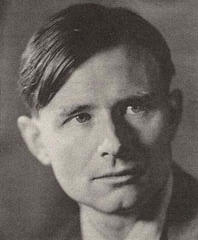
Christopher Isherwood

Christopher Isherwood Books

Novelist

A single man

A source page for quotes linked to Christopher Isherwood.
0 quotes

Goodbye to Berlin

A source page for quotes linked to Christopher Isherwood.

0 quotes

Exhumations

A source page for quotes linked to Christopher Isherwood.

0 quotes

October

A source page for quotes linked to Christopher Isherwood.

0 quotes

Prater Violet

A source page for quotes linked to Christopher Isherwood.

0 quotes

Related Quotes

“The harassed look is that of a desperately tired swimmer or runner; yet there is no question of stopping. The creature we are watching will struggle on and on until it drops. Not because it is heroic. It can imagine no alternative. Staring and staring into the mirror, it sees many faces within its face - the face of the child, the boy, the young man, the not-so-young-man - all present still, preserved as fossils, dead. Their message to this live dying creature is: Look at us - we have died -what is there to be afraid of? It answers them: But it happened so gradually, so easily. I am afraid of being rushed.”

“He crosses the front room, which he calls his study, and comes down the staircase. The stairs turn a corner; they are narrow and steep. You can touch both handrails with your elbows, and you have to bend your head, even if, like George, you are only five eight. This is a tightly planned little house. He often feels protected by its smallness; there is hardly room enough here to feel lonely. Nevertheless.”

“A story told me by Michael Barrie: Jesus and the Blessed Virgin go out to play golf. The Blessed Virgin is at the top of her form, drives and lands on the green. Jesus slices and lands in the bushes. A squirrel picks up the ball and runs off with it. A dog grab the squirrel, which still holds the ball in its mouth. An eagle swoops down, picks up the dog, squirrel and ball, and soars into the air. Out of a clear sky, lightning strikes the eagle, which drops the dog which drops the squirrel which drops the ball, right into the hole. The Blessed Virgin throws down her driver and exclaims indignantly, ‘Look, are you going to play golf or just fuck around?”

“An afternoon drive from Los Angeles will take you up into the high mountains, where eagles circle above the forests and the cold blue lakes, or out over the Mojave Desert, with its weird vegetation and immense vistas. Not very far away are Death Valley, and Yosemite, and Sequoia Forest with its giant trees which were growing long before the Parthenon was built; they are the oldest living things in the world. One should visit such places often, and be conscious, in the midst of the city, of their surrounding presence. For this is the real nature of California and the secret of its fascination; this untamed, undomesticated, aloof, prehistoric landscape which relentlessly reminds the traveller of his human condition and the circumstances of his tenure upon the earth. "You are perfectly welcome," it tells him, "during your short visit. Everything is at your disposal. Only, I must warn you, if things go wrong, don't blame me. I accept no responsibility. I am not part of your neurosis. Don't cry to me for safety. There is no home here. There is no security in your mansions or your fortresses, your family vaults or your banks or your double beds. Understand this fact, and you will be free. Accept it, and you will be happy.”

“And at this very moment, like a miracle, the rail-bus appeared. We waved our arms frantically, hardly daring to hope that it would stop. It did stop. We scrambled thankfully on board. That is the irony of travel. You spend your boyhood dreaming of a magic, impossibly distant day when you will cross the Equator, when your eyes will behold Quito. And then, in the slow prosaic process of life, that day undramatically dawns—and finds you sleepy, hungry and dull. The Equator is just another valley; you aren’t sure which and you don’t much care. Quito is just another railroad station, with fuss about baggage and taxis and tips. And the only comforting reality, amidst all this picturesque noisy strangeness, is to find a clean pension run by Czech refugees and sit down in a cozy Central European parlor to a lunch of well-cooked Wiener Schnitzel.”

“A veteran, calm and assured, he pauses for a well-measured moment in the doorway of the office and then, boldly, clearly, with the subtly modulated British intonation which his public demands of him, speaks his opening line, 'Good morning!' And the three secretaries - each of them a charming and accomplished actress in her own chosen style - recognise him instantly, without even a flicker of doubt, and reply 'Good morning' to him. (There is something religious here, like responses in church; a reaffirmation of faith in the basic American dogma, that it is, always, a Good Morning. Good, despite the Russians and their rockets, and all the ills and worries of the flesh. For of course we know, don't we, that the Russians and the worries are not real? They can be unsought and made to vanish. And therefore the morning can ve made to be good. Very well then, it is good.”

“...all around George, approaching him, crossing his path from every direction, is the male and female raw material which is fed daily into this factory, along the conveyor-belts of the freeways, to be processed, packaged and placed on the market... What do they think they are up to? Well, there is the official answer; preparing themselves for life which means a job and security in which to raise children to prepare themselves for life which means a job and security in which... Here, in their midst, George feels a sort of vertigo. Oh God, what will become of them all? What chance have they? Ought I yell out to them, right now, here, that it's hopeless? But George knows he can't do that. Because, absurdly, inadequately, in spite of himself almost, he is a representative of hope. And the hope is not false. No. It's just that George is like a man trying to sell a real diamond for a nickel, on the street. The diamond is protected from all but the tiniest few, because the great hurrying majority can never stop to dare to believe that it could conceivably be real.”

“A passenger isn't supposed to concern himself with the running of the ship; that is being taken care of by the crew, anonymous creatures down in the engine-room or up on deck, whom he never meets. But, in this case, I wasn't really a passenger. I was like a lazy or scared or drunken captain lying shut in his cabin when he ought to be on the bridge, giving orders. Sooner or later, I would have to come out and assume command and decide where we were going. But not yet, I told the crew. You don't need me yet. Can't you see I'm sick? You're doing all right without me. Sure, I'll come, when we get near land. Just let me lie here a little longer. Leave me alone, can't you? Let me sleep.”

“George is very far, right now, from sneering at any of these fellow creatures. They may be crude and mercenary and dull and low, but he is proud, is glad, is almost indecently gleeful to be able to stand up and be counted in their ranks—the ranks of that marvelous minority, The Living. They don't know their luck, these people on the sidewalk, but George knows his—for a little while at least—because he is freshly returned from the icy presence of The Majority, which Doris is to join. I am alive, he says to himself, I am alive! And life-energy surges hotly through him, and delight, and appetite. How good to be in a body—even this beat-up carcass—that still has warm blood and semen and rich marrow and wholesome flesh! The scowling youths on the corners see him as a dodderer no doubt, or at best as a potential score. Yet he claims a distant kinship with the strength of their young arms and shoulders and loins. For a few bucks he could get any one of them to climb into the car, ride back with him to his house, strip off butch leather jacket, skin-tight Levi's, shirt and cowboy boots and take a naked, sullen young athlete, in the wrestling bout of his pleasure. But George doesn't want the bought unwilling bodies of these boys. He wants to rejoice in his own body—the tough triumphant old body of a survivor. The body that has outlived Jim and is going to outlive Doris.”

“Buraya geldikten kısa bir süre sonra, beynim hâlâ bu manastırı Avrupa'daki bir fabrika kadar verimli hale getirmek için yapılabileceklere dair planlarla vızır vızır işlerken, Swami V.ye, daha sonra da bizzat Mahanta Maharaj'a gidip tarihöncesinden kalma kullanışsız yöntemlerinden vazgeçmeleri gerektiğini saygılı ama kesin bir tavırla söyleme cüretini göstermiştim. Kumaş her yıkandığında çok fazla gerua boyasının aktığını, dolayısıyla giysilerin kısa sürede yeniden boyanması gerektiğini belirtmiştim. Bir kimya firmasıyla anlaşsaydık da bize hakikaten kalıcı ticari boya hazırlasalardı, o tür boyayı kullanmak hem daha hızlı hem de çok daha kolay olurdu, ayrıca böylece birörnek bir gerua tonu elde edilir ve çok daha uzun süre dayanırdı. Mahanta Maharaj bunu biraz eğlenceli bulmuş görünmüştü ama beni hor görmemişti. Bu değişikliği yapmanın ne anlamı olacağını sormuştu kibarca. Bir an için ona öfkelenecektim az daha, söylediklerimi dinlemediği hissine kapılmıştım. "Bu sayede zaman kazanırız da ondan, Maharaj" demiştim. O zaman Maharaj çok derin anlamlı felsefi bir söz söylemişim gibi ciddi ve düşünceli bir tavır takınmış, sonra "Ah evet, zaman" diye mırıldanmış ve ardından sessiz kalmıştı.”

“A few times in my life I’ve had moments of absolute clarity. When for a few brief seconds the silence drowns out the noise and I can feel rather than think, and things seem so sharp and the world seems so fresh. It’s as though it had all just come into existence. I can never make these moments last. I cling to them, but like everything, they fade. I have lived my life on these moments. They pull me back to the present, and I realize that everything is exactly the way it was meant to be.”

“I think', said Sally, 'it must be marvellous to be a novelist. You're frightfully dreamy and unpractical and unbusinesslike, and people imagine they can fairly swindle you as much as they want - and then you sit down and write a book about them which fairly shows them what swine they all are, and it's the most terrific success and you make pots of money.”

“İkimiz de güldük. "Sally" dedim, "senin sevdiğim yanın ne biliyor musun? Bu kadar kolayca kandırılabilmen. Hiç kandırılamayan insanlar öylesine can sıkıcı ve ruhsuz oluyorlar ki!" "Beni hâlâ seviyor musun, Chris, sevgilim?" "Evet, Sally. Seni hâlâ seviyorum." Onu bir daha görmedim. Yaklaşık iki hafta sonra, tam onu aramam gerektiğini düşündüğüm bir sırada, Paris'ten bir kart aldım: "Buraya dün gece geldim. Yarın doğru dürüst yazarım. Kucak dolusu sevgiler." Arkadan mektup gelmedi. Bundan bir ay sonra Roma'dan bir kart daha aldım. Adres yoktu: "Bir iki güne kadar yazarım." diyordu. Bu altı yıl önceydi. Şimdi ben ona yazıyorum. Sally, bunu okuduğun zaman -eğer bir gün okuyacak olursan- lütfen bunu bir takdirname- sana verebileceğim en yürekten takdirname olarak kabul et...”

“Because the persecuting majority is vile, says the liberal, therefore the persecuted minority must be stainlessly pure...What's to prevent the bad from being persecuted by the worse? Did all the Christian victims on the arena have to be saints? ...A minority has its own kind of aggression. It absolutely dares the majority to attack it. It hates the majority - not without a cause, I grant you. It even hates the other minorities - because all minorities are in competition; each one proclaims that its sufferings are the worst and its wrongs are the blackest. And the more they all hate, and the more they're all persecuted, the nastier they become! Do you think it makes people nasty to be loved? You know it doesn’t! Then why should it make them nice to be loathed? While you’re being persecuted, you hate what’s happening to you, you hate the people who are making it happen; you’re in a world of hate. Why, you wouldn’t recognize love if you met it! You’d suspect love! You’d think there was something behind it—some motive—some trick.”

“2 NOTES “You broke your other appointment, didn’t you?” “I did not! I told you on the phone—these people canceled at the last minute—” “Oh, Geo dear, come off it! You know, I sometimes think, about you, whenever you do something really sweet, you’re ashamed of it afterwords! You knew jolly well how badly I needed you tonight, so you broke that appointment. I could tell you were fibbing, the minute you opened your mouth! You and I can’t pull the wool over each other’s eyes. I found that out, long ago. Haven’t you—after all these years?” “I certainly should have,” he agrees, smiling and thinking what an absurd and universally accepted bit of nonsense it is that your best friends must necessarily be the ones who best understand you.”

“To live sanely in Los Angeles ... you have to cultivate the art of staying awake. You must learn to resist (firmly but not tensely) the unceasing hypnotic suggestions of the radio, the billboards, the movies and the newspapers; those demon voices which are forever whispering in your ear what you should desire, what you should fear, what you should wear and eat and drink and enjoy, what you should think and do and be.”

“The landscape, like Los Angeles itself, is transitional. Impermanence haunts the city, with its mushroom industries--the aircraft perpetually becoming obsolete, the oil which must one day be exhausted, the movies which fill America's theatres for six months and are forgotten. Many of its houses--especially the grander ones--have a curiously disturbing atmosphere, a kind of psychological dankness which smells of anxiety, overdrafts, uneasy lust, whisky, divorce and lies.”

“Hollywood's two polar types are the cynically drunken writer aggressively nursing a ten-year-old reputation and the theatrically self-conscious hermit who strides the boulevard in sandals, home-made shorts and a prophetic beard, muttering against the Age of the Machines.”

“At one campus where I was lecturing, I asked a friend, "How many of my colleagues know I'm gay?" He answered, "All of them." I wasn't surprised. But, just the same, it was kind of spooky, because not one of them had ever given me the faintest sign that he or she knew. If I had spoken about it myself, most of them would have felt it was in bad taste.”

“Berlin is a skeleton which aches in the cold: it is my own skeleton aching. I feel in my bones the sharp ache of the frost in the girders of the overhead railway, in the iron-work of balconies, in bridges, tramlines, lamp-standards, latrines. The iron throbs and shrinks, the stone and the bricks ache dully, the plaster is numb.”

“The talk of pale, burning-eyed students, anarchists and utopians all, over tea and cigarettes in a locked room long past midnight, is next morning translated, with the literalness of utter innocence, into the throwing of the bomb, the shouting of the proud slogan, the dragging away of the young dreamer-doer, still smiling, to the dungeon and the firing squad.”

“Do you think it makes people nasty to be loved? You know it doesn’t! Then why should it make them nice to be loathed? While you’re being persecuted, you hate what’s happening to you, you hate the people who are making it happen; you’re in a world of hate. Why, you wouldn’t recognize love if you met it! You’d suspect love! You’d think there was something behind it—some motive—some trick.”