Quotessence
Home / Authors / Gustave Flaubert
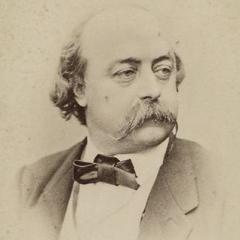
Gustave Flaubert

Gustave Flaubert Quotes

Writer

Filter quotes by topic

Famous Gustave Flaubert Quotes

“Ainsi leur rencontre avait eu l'importance d'une aventure. Ils s'étaient, tout de suite, accrochés par des fibres secrètes. D'ailleurs, comment expliquer les sympathies? Pourquoi telle particularité, telle imperfection indifférente ou odieuse dans celui-ci enchante-t-elle dans celui-là? Ce qu'on appelle le coup de foudre est vrai pour toutes les passions. Avant la fin de la semaine, ils se tutoyèrent”

“No era feliz, no lo había sido nunca. ¿De dónde venía, pues, aquella insuficiencia, de la vida, aquella instantánea podredumbre de las cosas en que se apoyaba?[...]. Cada sonrisa disimulaba un bostezo de aburrimiento, cada alegría una maldición, cada placer su propio asco, y los mejores besos no dejaban sobre los labios más que un delirio irrealizable de una voluptuosidad más alta.”

“Frederick expected that he would have felt spasms of joy; but the passions grow pale when we find ourselves in an altered situation; and, as he no longer saw Madame Arnoux in the environment wherein he had known her, she seemed to him to have lost some of her fascination; to have degenerated in some way that he could not comprehend—in fact, not to be the same. He was astonished at the serenity of his own heart./... sentimentele slăbesc cînd le schimbi locul...”

“Frederick expected that he would have felt spasms of joy; but the passions grow pale when we find ourselves in an altered situation; and, as he no longer saw Madame Arnoux in the environment wherein he had known her, she seemed to him to have lost some of her fascination; to have degenerated in some way that he could not comprehend—in fact, not to be the same. He was astonished at the serenity of his own heart. © Project Gutenberg /... sentimentele slăbesc cînd le schimbi locul...”

“Then they wondered if there were men in the stars. Why not? And as creation is harmonious, the inhabitants of Sirius ought to be huge, those of Mars middle-sized, those of Venus very small. Unless it is the same everywhere. There are businessmen, police up there; people trade, fight, dethrone their kings. Some shooting stars suddenly slid past, describing a course in the sky like the parabola of a monstrous rocket. ‘My Word,’ said Bouvard, ‘look at those worlds disappearing.’ Pecuchet replied: ‘If our world in its turn danced about, the citizens of the stars would be no more impressed than we are now. Ideas like that are rather humbling.’ ‘What is the point of it all?’ ‘Perhaps there isn’t a point.’ ‘Yet…’ and Pecuchet repeated the word two or three times, without finding anything more to say.”

“Si vous m'accordez que l'homme a une âme - je veux que les bêtes en aient, toutes les bêtes - à commencer par le pourceau pour finir à la fourmi, aux animaux microscopiques. Si l'homme est libre les animaux sont libres, ils seront comme lui récompensés ou punis, que d'âmes diverses, que d'enfers, que de paradis eût dit Voltaire - cette réflexion est humiliante - elle conduit au matérialisme et au nihilisme. (If you grant me that man has a soul, I like to think that animals have souls, too-all animals, from the pig to the ant, even the microscopic animals. If man is free, animals are free; like him they will be rewarded or punished. So many different souls, so many hells, so many heavens, Voltaire would have said. This reflection is humiliating. It leads to materialism or to nihilism.)”

“At other times, at the edge of a wood, especially at dusk, the trees themselves would assume strange shapes: sometimes they were arms rising heavenwards, , or else the trunk would twist and turn like a body being bent by the wind. At night, when I woke up and the moon and the stars were out, I would see in the sky things that filled me simultaneously with dread and longing. I remember that once, one Christmas Eve, I saw a great naked women, standing erect, with rolling eyes; she must have been a hundred feet high, but along she drifted, growing ever longer and ever thinner, and finally fell apart, each limb remaining separate, with the head floating away first as the rest of her body continued to waver”

“Charles's conversation was as flat as a sidewalk, and everyone's ideas filed along it in their ordinary clothes, exciting no emotion, no laughter, no reverie. He had never been curious, he said, when he lived in Rouen, to go to the theater and see the actors from Paris. He did not know how to swim, or fence, or fire a pistol, and he could not explain to her, one day, a riding term she had come upon in a novel. But shouldn't a man know everything, excel at a host of different activities, initiate you into the intensities of passion, the refinements of life, all its mysteries? Yet this man taught her nothing, knew nothing, wished for nothing. He thought she was happy; and she resented him for that settled calm, that ponderous serenity, that very happiness which she herself brought him.”

“Didn't love, like a plant from India, require a prepared soil, a particular temperature? Sighs in the moonlight, long embraces, tears flowing over hands yielded to a lover, all the fevers of the flesh and the languors of tenderness thus could not be separated from the balconies of great châteaux filled with idle amusements, a boudoir with silk blinds, a good thick carpet, full of pots of flowers, and a bed raised on a dais, nor from the sparkle of precious stones and shoulder knots on servants' livery.”

“Ah! In fact there are two moralities ... The petty one, the conventional one, the one devised by men, that keeps changing and bellows so loudly, making a commotion down here among us, in a perfectly pedestrian way ... But the other one, the eternal one, is all around and above us, like a landscape that surrounds us and the blue sky that gives us light.”

“A man, at least, is free; he can explore every passion, every land, overcome obstacles, taste the most distant pleasures. But a woman is continually thwarted. Inert and pliant at the same time, she must struggle against both the softness of her flesh and subjection to the law. Her will, like the veil tied to her hat by a string, flutters with every breeze; there is always some desire luring her on, some convention holding her back.”

“I took Eugene Sue's Arthur from the reading-room. It's indescribable, enough to make you vomit. You have to read this to realize the pitifulness of money, success, and the public. Literature has become consumptive. It spits and slobbers, covers its blisters with salve and sticking-plaster, and has grown bald from too much hair-slicking. It would take Christ of art to cure this leper.”