Quotessence
Home / Authors / Richard M. Weaver Books
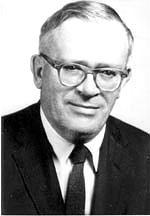
Richard M. Weaver

Richard M. Weaver Books

Philosopher

Related Quotes

“Progress never defines its ultimate objective but thrusts its victims at once into an infinite series,' Mr. [John Crowe] Ransom said' 'Industrialism,' he declared, 'is rightfully a menial, of almost miraculous cunning, but no intelligence; it needs to be strongly governed, or it will destroy the economy of the household. Only a community of tough conservative habit can master it.”

“The saying of John Peale Bishop is worth recalling, that the South excelled in two things which the French deem essential to civilization: a code of manners and a native cuisine. Both are apt to suffer when life is regarded as a means to something else. Efficiency and charm are mortal enemies, and Southern charm indubitably derives from a carelessness about the efficient aspects of life.”

“That it does not matter what a man believes is a statement heard on every side today. ... What he believes tells him what the world is for. How can men who disagree about what the world is for agree about any of the minutiae of daily conduct? The statement really means that it does not matter what a man believes so long as he does not take his beliefs seriously.”

“It is characteristic of the barbarian ... to insist upon seeing a thing "as it is." The desire testifies that he has nothing in himself with which to spiritualize it; the relation is one of thing to thing without the intercession of the imagination. Impatient of the veiling with which the man of higher type gives the world imaginative meaning, the barbarian and the Philistine, who is the barbarian living amid culture, demands the access of immediacy. Where the former wishes representation, the latter insists upon starkness of materiality, suspecting rightly that forms will mean restraint.”

“The member of a culture ... purposely avoids the relationship of intimacy; he wants the object somehow depicted and fictionalized. ... He is embarrassed when this is taken out of its context of proper sentiments and presented bare, for he feels that this is a reintrusion of that world which his whole conscious effort has sought to banish. Forms and conventions are the ladder of ascent. And hence the speechlessness of the man of culture when he beholds the barbarian tearing aside some veil which is half adornment, half concealment.”

“In recognizing that words have power to define and to compel, the semanticists are actually testifying to the philosophic quality of language which is the source of their vexation. In an attempt to get rid of that quality, they are looking for some neutral means which will be a nonconductor of the current called "emotion" and its concomitant of evaluation.”

“The semanticists are exactly wrong in regarding language as an obstruction or series of pitfalls. Language, on the contrary, appears as a great storehouse of universal memory, or it may be said to serve as a net, not imprisoning us but supporting us and aiding us to get at a meaning beyond present meaning through the very fact that it embodies others' experiences.”

“The man of frank and strong prejudices, far from being a political and social menace and an obstacle in the path of progress, is often a benign character and helpful citizen. The chance is far greater, furthermore, that he will be more creative than the man who can never come to more than a few gingerly held conclusions, or who thinks that all ideas should be received with equal hospitality. There is such a thing as being so broad you are flat.”

“Try to imagine a man setting out for the day without a single prejudice. ... Inevitably he would be in a state of paralysis. He could not get up in the morning, or choose his necktie, or make his way to the office, ... or, to come right down to the essence of the thing, even maintain his identity.”

“To one completely committed to this realm of becoming, as are the empiricists, the claim to apprehend verities is a sign of psychopathology. Probably we have here but a highly sophisticated expression of the doctrine that ideals are hallucination and that the only normal, sane person is the healthy extrovert, making instant, instinctive adjustments to the stimuli of the material world.”

“In the popular arena, one can tell ... that the average man ... imagines that an industrious acquisition of particulars will render him a man of knowledge. With what pathetic trust does he recite his facts! He has been told that knowledge is power, and knowledge consists of a great many small things.”

“It has been remarked that when one passes among the patients of the psychiatric ward, he encounters among the several sufferers every aspect of normal personality in morbid exaggeration. ... As one passes through the modern centers of enterprise and of higher learning, he is met with similar autonomies of development. ... The scientist, the technician, the scholar, who have left the One for the Many are puffed up with vanity over their ability to describe precisely some minute portion of the world. Men so obsessed with fragments can no more be reasoned with than other psychotics.”

“Those who are guilty of the argumentum ad ignorantiam profess belief in something because its opposite cannot be proved ... In the realm where "prejudice" is now most an issue, it normally takes a form like this: you cannot prove by the method of statistics and quantitative measurement that men are not equal. Therefore all men are equal. ... You cannot prove again by the methods of science that one culture is higher than another. Therefore the culture of the Digger Indians is just a good as that of Muncie, Indiana, or thirteenth-century France.”

“There are some despotic governments so filled with a feeling of insecurity that they regard the free life of culture as a threat to their existence. ... On the other extreme is the kind of popular government which is so distrustful of all forms of distinction that it sees even in the cultivated individual a menace to its existence. Such states are likely to maintain a pressure which discourages cultural endeavor, although the pressure may be exerted through social channels.”

“Many of us who read the literature of social science as laymen are conscious of being admitted at a door which bears the watchword "scientific objectivity" and of emerging at another door which looks out upon a variety of projects for changing, renovating, or revolutionizing society. In consequence, we feel the need of a more explicit account of how the student of society passes from facts to values or statements of policy.”

“The most important thing about the gentleman was that he was an idealist. ... He was bred up to a code of self-restraint which taught resistance to pragmatic temptation. He was definitely a man of sentiment, who refused to put matters on a basis of materialism and self-aggrandizement.”

“A prejudice may be an unreasoned judgment, he [Hibben] pointed out, but an unreasoned judgment is not necessarily an illogical judgment. ... First, there are those judgments whose verification has simply dropped out of memory. ... The second type of unreasoned judgments we hold is the opinions we adopt from others ... The third class of judgments in Professor Hibben's list comprises those which have subconscious origin. The material that furnishes their support does not reach the focal point of consciousness, but psychology insists upon its existence.”

“It may be true that only those minds which are habituated to think logically can safely trust their intuitive conclusions, on the theory that the subconscious level will do its kind of work as faithfully as the conscious does its kind.”

“Education is a process by which the individual is developed into something better than he would have been without it. ... The very though seems in a way the height of presumption. For one thing, it involves the premise that some human beings can be better than others.”