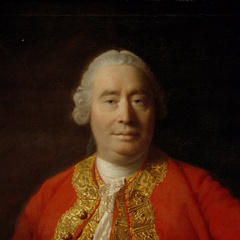
“The best taxes are such as are levied upon consumptions, especially those of luxury; because such taxes are least felt by the people. They seem, in some measure, voluntary; since a man may choose how far he will use the commodity: They naturally produce sobriety and frugality, if judiciously imposed: And being confounded with the natural price of the commodity, they are scarcely perceived by the consumers. Their only disadvantage is that they are expensive in the levying.”
Source: The philosophical works of David Hume
“What we call a mind is nothing but a heap or collection of different perceptions, united together by certain relations and supposed, though falsely, to be endowed with a perfect simplicity and identity.”
Source: A Treatise of Human Nature: Top Philosophy Collections
“of the world and drudgery of business , seeks a pretense of reason to give itself a full and uncontrolled indulgence.”
Source: The Empiricists: Locke: Concerning Human Understanding; Berkeley: Principles of Human Knowledge & 3 Dialogues; Hume: Concerning Human Understanding & Concerning Natural Religio
“Were a stranger to drop on a sudden into this world, I would show him, as a specimen of its ills, a hospital full of diseases, a prison crowded with malefactors and debtors, a field of battle strewed with carcasses, a fleet foundering in the ocean, a nation languishing under tyranny, famine, or pestilence. To turn the gay side of life to him, and give him a notion of its pleasures; whither should I conduct him? to a ball, to an opera, to court? He might justly think, that I was only showing him a diversity of distress and sorrow.”
Source: Delphi Complete Works of David Hume (Illustrated)
“In the sphere of natural investigation, as in poetry and painting, the delineation of that which appeals most strongly to the imagination, derives its collective interest from the vivid truthfulness with which the individual features are portrayed.”
“Methinks I am like a man, who having struck on many shoals, and having narrowly escap'd shipwreck in passing a small frith, has yet the temerity to put out to sea in the same leaky weather-beaten vessel, and even carries his ambition so far as to think of compassing the globe under these disadvantageous circumstances.”
Source: A Treatise of Human Nature: Revision of Great Book
“There is an inconvenience which attends all abstruse reasoning. that it may silence, without convincing an antagonist, and requires the same intense study to make us sensible of its force, that was at first requisite for its invention. When we leave our closet, and engage in the common affairs of life, its conclusions seem to vanish, like the phantoms of the night on the appearance of the morning; and 'tis difficult for us to retain even that conviction, which we had attain'd with difficulty.”
Source: A Treatise of Human Nature: Top Philosophy Collections
“Morals excite passions, and produce or prevent actions. Reason of itself is utterly impotent in this particular. The rules of morality, therefore, are not conclusions of our reason.”
Source: A Treatise on Human Nature: Being an Attempt to Introduce the Experimental Method of Reasoning Into Moral Subjects; and Dialogues Concerning Natural Religion
“Though experience be our only guide in reasoning concerning matters of fact; it must be acknowledged, that this guide is not altogether infallible, but in some cases is apt to lead us into errors.”
Source: An Enquiry Concerning Human Understanding ; [with] A Letter from a Gentleman to His Friend in Edinburgh ; [and] An Abstract of a Treatise of Human Nature
“Eloquence, when at its highest pitch, leaves little room for reason or reflection; but addressing itself entirely to the fancy or the affections, captivates the willing hearers, and subdues their understanding. Happily, this pitch it seldom attains. But what a Tully or a Demosthenes could scarcely effect over a Roman or Athenian audience, every Capuchin, every itinerant or stationary teacher can perform over the generality of mankind, and in a higher degree, by touching such gross and vulgar passions.”
Source: An Enquiry Concerning Human Understanding
“In all ages of the world, priests have been enemies to liberty; and it is certain, that this steady conduct of theirs must have been founded on fixed reasons of interest and ambition. Liberty of thinking, and of expressing our thoughts, is always fatal to priestly power, and to those pious frauds, on which it is commonly founded; and, by an infallible connexion, which prevails among all kinds of liberty, this privilege can never be enjoyed, at least has never yet been enjoyed, but in a free government.”
Source: Essays Moral, Political, Literary: Revision of Great Book
“The slaving Poor are incapable of any Principles: Gentlemen may be converted to true Principles, by Time and Experience. The middling Rank of Men have Curiosity and Knowledge enough to form Principles, but not enough to form true ones, or correct any Prejudices that they may have imbib'd: And 'tis among the middling Rank, that Tory Principles do at present prevail most in England.”
Source: The philosophical works of David Hume
“Avarice, the spur of industry, is so obstinate a passion, and works its way through so many real dangers and difficulties, that it is not likely to be scared by an imaginary danger, which is so small, that it scarcely admits of calculation. Commerce, therefore, in my opinion, is apt to decay in absolute governments, not because it is there less secure, but because it is less honourable.”
“What peculiar privilege has this little agitation of the brain which we call thought, that we must thus make it the model of the whole universe? Our partiality in our own favour does indeed present it on all occasions; but sound philosophy ought carefully to guard against so natural an illusion.”
Source: The Philosophical Works of David Hume ... Containing Dialogues Concerning Natural Religion, Essays on the Immortality of the Soul, Suicide ... &c. A New Edition
“Berkeley , Hume, Kant , Fichte , Hegel , James , Bergson all are united in one earnest attempt, the attempt to reinstate man with his high spiritual claims in a place of importance in the cosmic scheme.”
“All inferences from experience... are effects of custom, not of reasoning.”
“No conclusions can be more agreeable to scepticism than such as make discoveries concerning the weakness and narrow limits of human reason and capacity.”
Source: An Enquiry Concerning Human Understanding ; [with] A Letter from a Gentleman to His Friend in Edinburgh ; [and] An Abstract of a Treatise of Human Nature
“Poets themselves, tho' liars by profession, always endeavour to give an air of truth to their fictions.”
“The heroes in paganism correspond exactly to the saints in popery, and holy dervises in MAHOMETANISM. The place of, HERCULES, THESEUS, HECTOR, ROMULUS, is now supplied by DOMINIC, FRANCIS, ANTHONY, and BENEDICT. Instead of the destruction of monsters, the subduing of tyrants, the defence of our native country; whippings and fastings, cowardice and humility, abject submission and slavish obedience, are become the means of obtaining celestial honours among mankind.”
Source: Delphi Complete Works of David Hume (Illustrated)
“Let us fix our attention out of ourselves as much as possible; let us chase our imagination to the heavens, or to the utmost limits of the universe; we never really advance a step beyond ourselves, nor can conceive any kind of existence, but those perceptions, which have appeared in that narrow compass.”
“THERE is no method of reasoning more common, and yet none more blameable, than, in philosophical disputes, to endeavour the refutation of any hypothesis, by a pretence of its dangerous consequences to religion and morality. When any opinion leads to absurdities, it is certainly false; but it is not certain that an opinion is false, because it is of dangerous consequence. Such topics, therefore, ought entirely to be forborne; as serving nothing to the discovery of truth, but only to make the person of an antagonist odious.”
Source: Essays Moral, Political, and Literary
“The most perfect philosophy of the natural kind only staves off our ignorance a little longer: as perhaps the most perfect philosophy of the moral or metaphysical kind serves only to discover larger portions of it. Thus the observation of human blindness and weakness is the result of all philosophy, and meets us at every turn, in spite of our endeavours to elude or avoid it.”
Source: Essays and Treatises on Several Subjects
“If nature has been frugal in her gifts and endowments, there is the more need of art to supply her defects. If she has been generous and liberal, know that she still expects industry and application on our part, and revenges herself in proportion to our negligent ingratitude. The richest genius, like the most fertile soil, when uncultivated, shoots up into the rankest weeds; and instead of vines and olives for the pleasure and use of man, produces, to its slothful owner, the most abundant crop of poisons.”
Source: Philosophical Essays: On Morals, Literature, and Politics
“Rousseau was mad but influential; Hume was sane but had no followers.”
“It must appear impossible, that theism could, from reasoning, have been the primary religion of human race, and have afterwards, by its corruption, given birth to polytheism and to all the various superstitions of the heathen world. Reason, when obvious, prevents these corruptions: When abstruse, it keeps the principles entirely from the knowledge of the vulgar, who are alone liable to corrupt any principle or opinion.”
Source: The Natural History of Religion: Revision of Great Book
“In all the events of life, we ought still to preserve our scepticism. If we believe that fire warms, or water refreshes, it is only because it costs us too much pains to think otherwise.”
“A wise man's kingdom is his own breast: or, if he ever looks farther, it will only be to the judgment of a select few, who are free from prejudices, and capable of examining his work. Nothing indeed can be a stronger presumption of falsehood than the approbation of the multitude; and Phocion, you know, always suspected himself of some blunder when he was attended with the applauses of the populace.”
Source: The Letters of David Hume: 1727-1765
“What would become of history, had we not a dependence on the veracity of the historian, according to the experience, what we have had of mankind?”
Source: Essays and Treatises on Philosophical Subjects
“If refined sense, and exalted sense, be not so useful as common sense, their rarity, their novelty, and the nobleness of their objects, make some compensation, and render them the admiration of mankind.”
Source: An Enquiry Concerning the Principles of Morals
“It were better, never to look beyond the present material world. By supposing it to contain the principle of its order within itself, we really assert it to be God; and the sooner we arrive at that divinity, the better.”
Source: The Philosophical Works: Including All the Essays, and Exhibiting the More Important Alterations and Corrections in the Successive Ed. Publ. by the Author
“Anything that is conceivable is possible.”
“If God is omnipotent, omniscient and wholly good, whence evil? If God wills to prevent evil but cannot, then He is not omnipotent. If He can prevent evil but does not, then he is not good. In either case he is not God.”
“Nothing is so convenient as a decisive argument ... which must at least silence the most arrogant bigotry and superstition, and free us from their impertinent solicitations. I flatter myself, that I have discovered an argument ... which, if just, will, with the wise and learned, be an everlasting check to all kinds of superstitious delusion, and consequently, will be useful as long as the world endures. For so long, I presume, will the accounts of miracles and prodigies be found in all history, sacred and profane.”
Source: An Enquiry Concerning Human Understanding; [with] A Letter from a Gentleman to His Friend in Edinburgh; [and] An Abstract of a Treatise of Human Nature
“I say then, that belief is nothing but a more vivid, lively, forcible, firm, steady conception of an object, than what the imagination alone is ever able to attain. This variety of terms, which may seem so unphilosophical, is intended only to express that act of the mind, which renders realities, or what is taken for such, more present to us than fictions, causes them to weigh more in the thought, and gives them a superior influence on the passions and imagination.”
Source: Essays and Treatises on several subjects, etc. New edition
“Interest is the barometer of the state.”
Source: Essays, Literary, Moral, and Political
“Nothing is pure and entire of a piece. All advantages are attended with disadvantages. A universal compensation prevails in all conditions of being and existence.”
Source: Essays, Literary, Moral, and Political
“Among the arts of conversation no one pleases more than mutual deference or civility, which leads us to resign our own inclinations to those of our companions, and to curb and conceal that presumption and arrogance so natural to the human mind.”
Source: Delphi Complete Works of David Hume (Illustrated)
“Though men of delicate taste be rare, they are easily to be distinguished in society by the soundness of their understanding, and the superiority of their faculties above the rest of mankind.”
Source: Delphi Complete Works of David Hume (Illustrated)
“Nothing can be more unphilosophical than to be positive or dogmatical on any subject; and even if excessive scepticism could be maintained it would not be more destructive to all just reasoning and inquiry. When men are the most sure and arrogant, they are commonly the most mistaken, and have there given reins to passion, without that proper deliberation and suspense which can alone secure them from the grossest absurdities.”
Source: An Enquiry Concerning Human Understanding: Revision of Great Book
“Every movement of the theater by a skilful poet is communicated, as it were, by magic, to the spectators; who weep, tremble, resent, rejoice, and are inflamed with all the variety of passions which actuate the several personages of the drama.”
Source: Essays and treatises on several subjects: An inquiry concerning human understanding. A dissertation on the passions. An inquiry concerning the principles of morals. The natural history of religion
“Eloquence, when in its highest pitch, leaves little room for reason or reflection.”
Source: The Philosophical Works: Including All the Essays, and Exhibiting the More Important Alterations and Corrections in the Successive Ed. Publ. by the Author
“There is a set of harmless liars, frequently to be met with in company, who deal much in the marvellous. Their usual intention is to please and entertain; but as men are most delighted with what they conceive to be the truth, these people mistake the means of pleasing, and incur universal blame.”
Source: An Enquiry Concerning the Principles of Morals
“All ills spring from some vice, either in ourselves or others; and even many of our diseases proceed from the same origin. Remove the vices; and the ills follow. You must only take care to remove all the vices. If you remove part, you may render the matter worse. By banishing vicious luxury, without curing sloth and an indifference to others, you only diminish industry in the state, and add nothing to men's charity or their generosity.”
Source: Essays, moral, political, and literary
“Almost every one has a predominant inclination, to which his other desires and affections submit, and which governs him, though perhaps with some intervals, though the whole course of his life.”
Source: Moral Philosophy
“Everything is sold to skill and labor; and where nature furnishes the materials, they are still rude and unfinished, till industry, ever active and intelligent, refines them from their brute state, and fits them for human use and convenience.”
Source: The philosophical works of David Hume
“Great pleasures are much less frequent than great pains.”
Source: Essays and treatises on several subjects: essays, moral, political and literary
“Praise never gives us much pleasure unless it concur with our own opinion, and extol us for those qualities in which we chiefly excel.”
Source: Essays and Treatises on Several Subjects
“Accurate and just reasoning is the only catholic remedy, fitted for all persons and all dispositions; and is alone able to subvert that abstruse philosophy and metaphysical jargon, which, being mixed up with popular superstition, renders it in a manner impenetrable to careless reasoners, and gives it the air of science and wisdom.”
Source: The Philosophical Works of David Hume: Including All the Essays, and Exhibiting the More Important Alterations and Corrections in the Successive Editions Pub. by the Author
“Riches are valuable at all times, and to all men, because they always purchase pleasures such as men are accustomed to and desire; nor can anything restrain or regulate the love of money but a sense of honor and virtue, which, if it be not nearly equal at all times, will naturally abound most in ages of knowledge and refinement.”
Source: Essays and treatises on several subjects in two volumes: Essays, moral, political, and literacy
“Friendship is a calm and sedate affection, conducted by reason and cemented by habit; springing from long acquaintance and mutual obligations, without jealousies or fears, and without those feverish fits of heat and cold, which cause such an agreeable torment in the amorous passion.”
Source: Essays Moral, Political, Literary: Revision of Great Book