Quotessence
Home / Authors / Douglas Adams
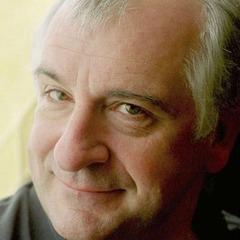
Douglas Adams

Douglas Adams Quotes

Writer

Filter quotes by topic

Famous Douglas Adams Quotes

“Not unnaturally, many elevators imbued with intelligence and precognition became terribly frustrated with the mindless business of going up and down, up and down, experimented briefly with the notion of going sideways, as a sort of existential protest, demanded participation in the decision-making process and finally took to squatting in basements sulking. An impoverished hitch-hiker visiting any planets in the Sirius star system these days can pick up easy money working as a counsellor for neurotic elevators.”

“The idea was fantastically, wildly improbable. But like most fantastically, wildly improbable ideas it was at least as worthy of consideration as a more mundane one to which the facts had been strenuously bent to fit.”

“Dirk turned on the car wipers, which grumbled because they didn't have quite enough rain to wipe away, so he turned them off again. Rain quickly speckled the windscreen. He turned on the wipers again, but they still refused to feel that the exercise was worthwhile, and scraped and squeaked in protest.”

“Dennis Hutch had stepped up into the top seat when its founder had died of a lethal overdose of brick wall, taken while under the influence of a Ferrari and a bottle of tequila.”

“You cannot see what I see because you see what you see. You cannot know what I know because you know what you know. What I see and what I know cannot be added to what you see and what you know because they are not of the same kind. Neither can it replace what you see and what you know, because that would be to replace you yourself." "Hang on, can I write this down?" said Arthur, excitedly fumbling in his pocket for a pencil.”

“The lights were off so that his heads could avoid looking at each other because neither of them was currently a particular engaging sight, nor had they been since he had made the error of looking into his soul. It had indeed been an error. It had been late one night-- of course. It had been a difficult day-- of course. There had been soulful music playing on the ship's sound system-- of course. And he had, of course, been slightly drunk. In other words, all the usual conditions that bring on a bout of soul searching had applied, but it had, nevertheless, clearly been an error.”

“Ghastly," continued Marvin, "it all is. Absolutely ghastly. Just don't even talk about it. Look at this door," he said, stepping through it. The irony circuits cut in to his voice modulator as he mimicked the style of the sales brochure. " 'All the doors in his spaceship have a cheerful and sunny disposition. It is their pleasure to open for you, and their satisfaction to close again with the knowledge of a job well done.' " As the door closed behind them it became apparent that it did indeed have a satisfied sighlike quality to it. "Hummmmmmmyummmmmmmah!" it said.”

“Come on,” he droned, “I’ve been ordered to take you down to the bridge. Here I am, brain the size of a planet and they ask me to take you down to the bridge. Call that job satisfaction? ’Cos I don’t.” He turned and walked back to the hated door. “Er, excuse me,” said Ford following after him, “which government owns this ship?” Marvin ignored him. “You watch this door,” he muttered, “it’s about to open again. I can tell by the intolerable air of smugness it suddenly generates.”

“It is worth repeating at this point the theories that Ford had come up with, on his first encounter with human beings, to account for their peculiar habit of continually stating and restating the very very obvious, as in "It's a nice day," or "You're very tall," or "So this is it, we're going to die." His first theory was that if human beings didn't keep exercising their lips, their mouths probably shriveled up. After a few months of observation he had come up with a second theory, which was this--"If human beings don't keep exercising their lips, their brains start working.”

“Simple. I got very bored and depressed, so I went and plugged myself in to its external computer feed. I talked to the computer at great length and explained my view of the Universe to it," said Marvin. "And what happened?" pressed Ford. "It committed suicide," said Marvin and stalked off back to the Heart of Gold.”

“In the end, it was the Sunday afternoons he couldn't cope with, and that terrible listlessness that starts to set in about 2:55, when you know you've taken all the baths that you can usefully take that day, that however hard you stare at any given paragraph in the newspaper you will never actually read it, or use the revolutionary new pruning technique it describes, and that as you stare at the clock the hands will move relentlessly on to four o'clock, and you will enter the long dark teatime of the soul.”

“Yes it is,' said the Professor. 'Wait—' he motioned to Richard, who was about to go out again and investigate— 'let it be. It won't be long.' Richard stared in disbelief. 'You say there's a horse in your bathroom, and all you can do is stand there naming Beatles songs?' The Professor looked blankly at him.”

“The argument goes something like this: "I refuse to prove that I exist," says God, "for proof denies faith, and without faith I am nothing.”

“Arthur shook his head and sat down. He looked up. “I thought you must be dead …” he said simply. “So did I for a while,” said Ford, “and then I decided I was a lemon for a couple of weeks. I kept myself amused all that time jumping in and out of a gin and tonic.”

“In many of the more relaxed civilizations on the Outer Eastern Rim of the Galaxy, the Hitch-Hiker's Guide has already supplanted the great Encyclopaedia Galactica as the standard repository of all knowledge and wisdom, for though it has many omissions and contains much that is apocryphal, or at least wildly inaccurate, it scores over the older, more pedestrian work in two important respects. First, it is slightly cheaper; and secondly it has the words DON'T PANIC inscribed in large friendly letters on its cover.”

“Ford looked at him severely. And no sneaky knocking down Mr Dent's house whilst he's away, alright?" he said. The mere thought," growled Mr Prosser, "hadn't even begun to speculate," he continued, settling himself back, "about the merest possibility of crossing my mind.”

“Marvin trudged on down the corridor, still moaning. "...and then of course I've got this terrible pain in all the diodes down my left hand side..." "No?" said Arthur grimly as he walked along beside him. "Really?" "Oh yes," said Marvin, "I mean I've asked for them to be replaced but no one ever listens." "I can imagine.”

“Mr L Prosser was, as they say, only human. In other words he was a carbon-based life form descended from an ape. More specifically he was forty, fat and shabby and worked for the local council. Curiously enough, though he didn't know it, he was also a direct male-line descendant of Genghis Khan, though intervening generations and racial mixing had so juggled his genes that he had no discernible Mongoloid characteristics, and the only vestiges left in Mr L Prosser of his mighty ancestry were a pronounced stoutness about the tum and a predilection for little fur hats.”